
01 / BTRY
The challenge
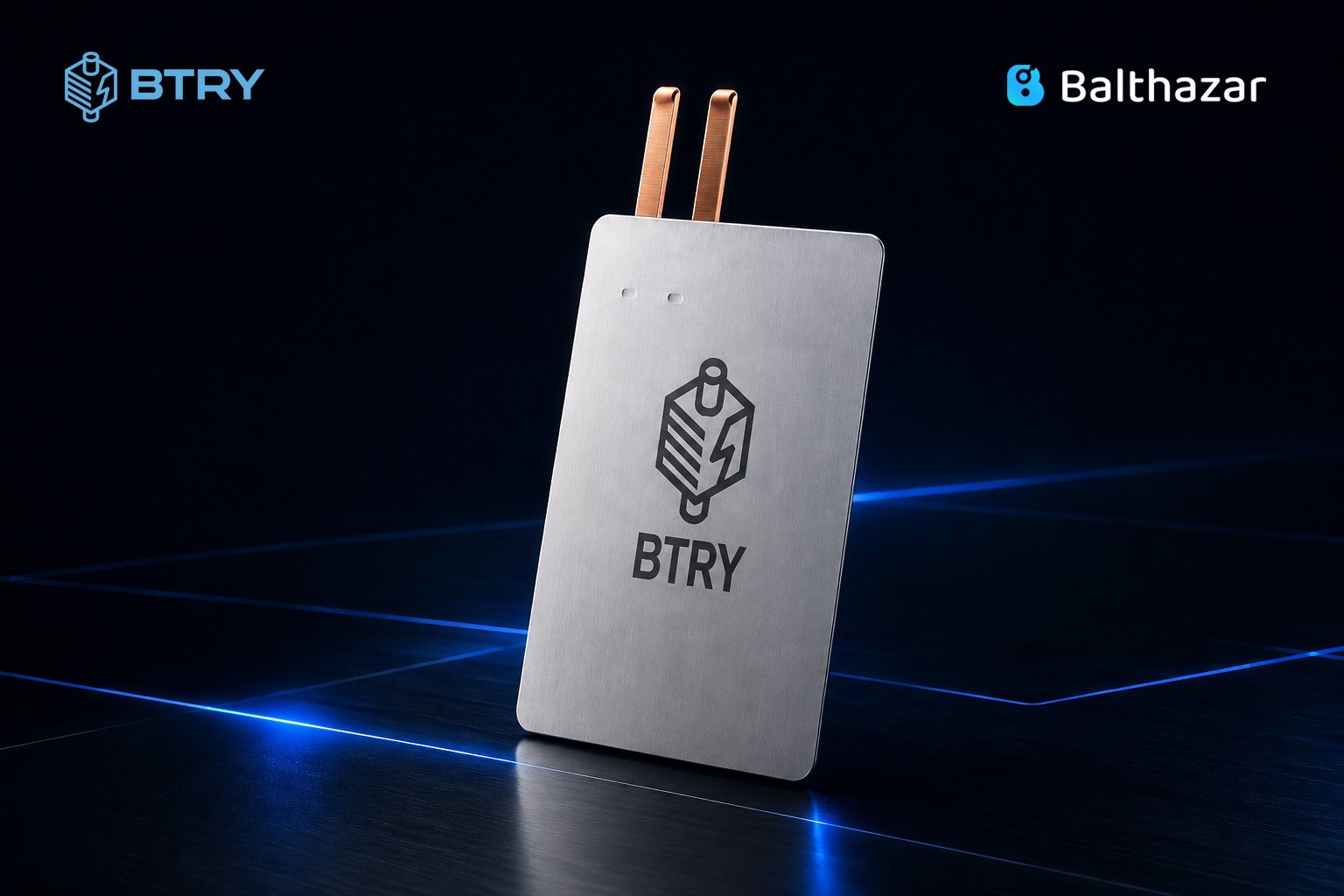
BTRY develops ultra-thin solid-state batteries using semiconductor fabrication technologies. As R&D moved toward production readiness, each cell generated fabrication records, raw measurements and performance metrics that needed to stay connected.
Data was spread across shared drives and individual spreadsheets. Engineers used different analysis workflows, and comparing experiments meant rebuilding datasets. Recipe names were recorded, but process parameters were not structurally linked to performance outcomes.
02 / BTRY
A record built around each cell
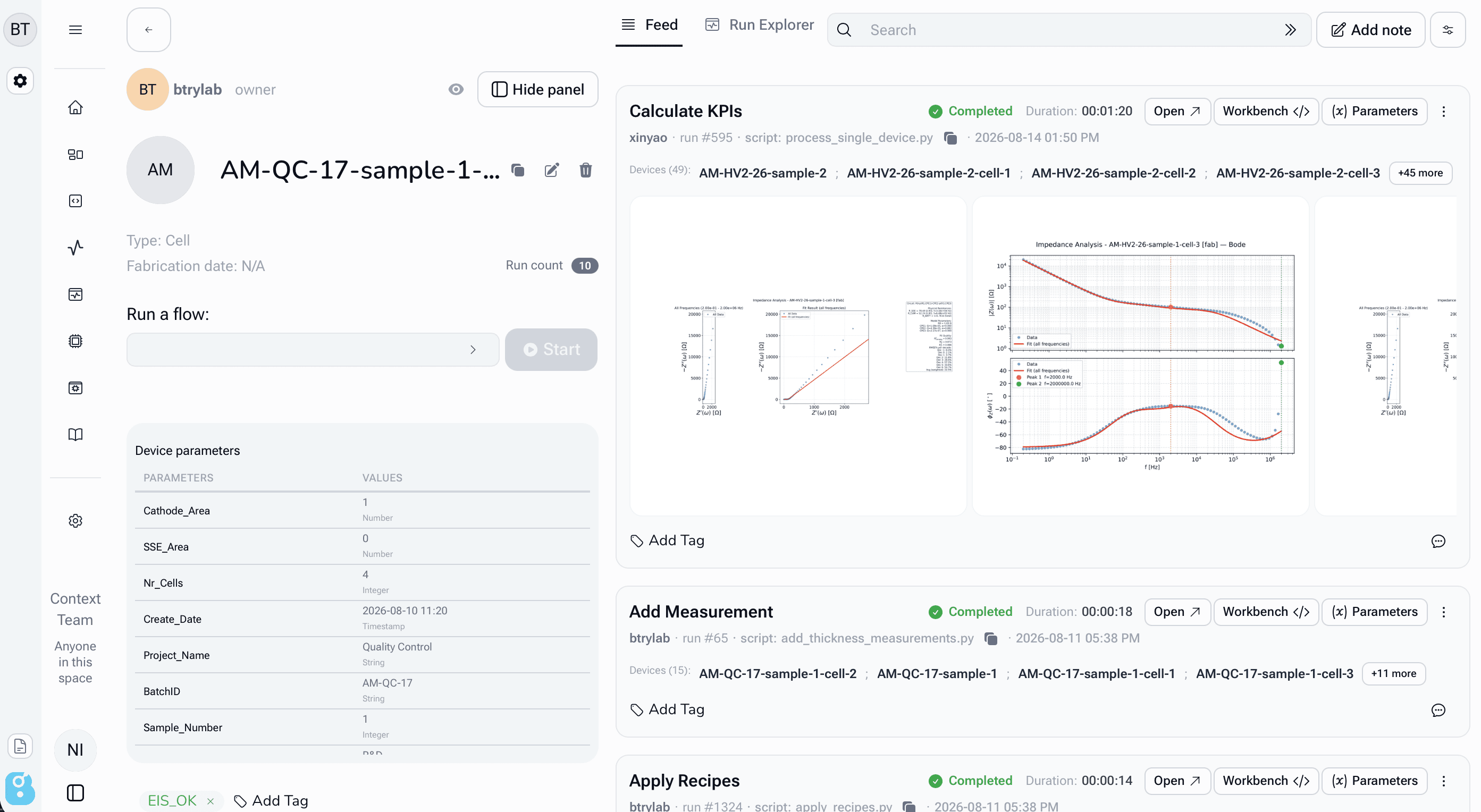
BTRY implemented Balthazar as its central R&D data and workflow platform, integrating existing data-generation processes rather than replacing them. Each device is linked to fabrication history, material configurations, workflows and metadata.
Version-controlled workflows and shared KPI extraction make results comparable across engineers. Dashboards connect process parameters with device performance, so the team can compare iterations without manually reconstructing the underlying datasets.
03 / BTRY
What changed
Cross-operator comparisons are now consistent and reproducible, with performance metrics linked directly to fabrication context. Engineers can focus on interpreting results and deciding what to test next.
BTRY is already using structured Balthazar data with AI tools to explore correlations between fabrication parameters and battery performance. This infrastructure supports higher throughput while retaining traceability and visibility into what drives performance.