
01 / Zurich Instruments
The challenge
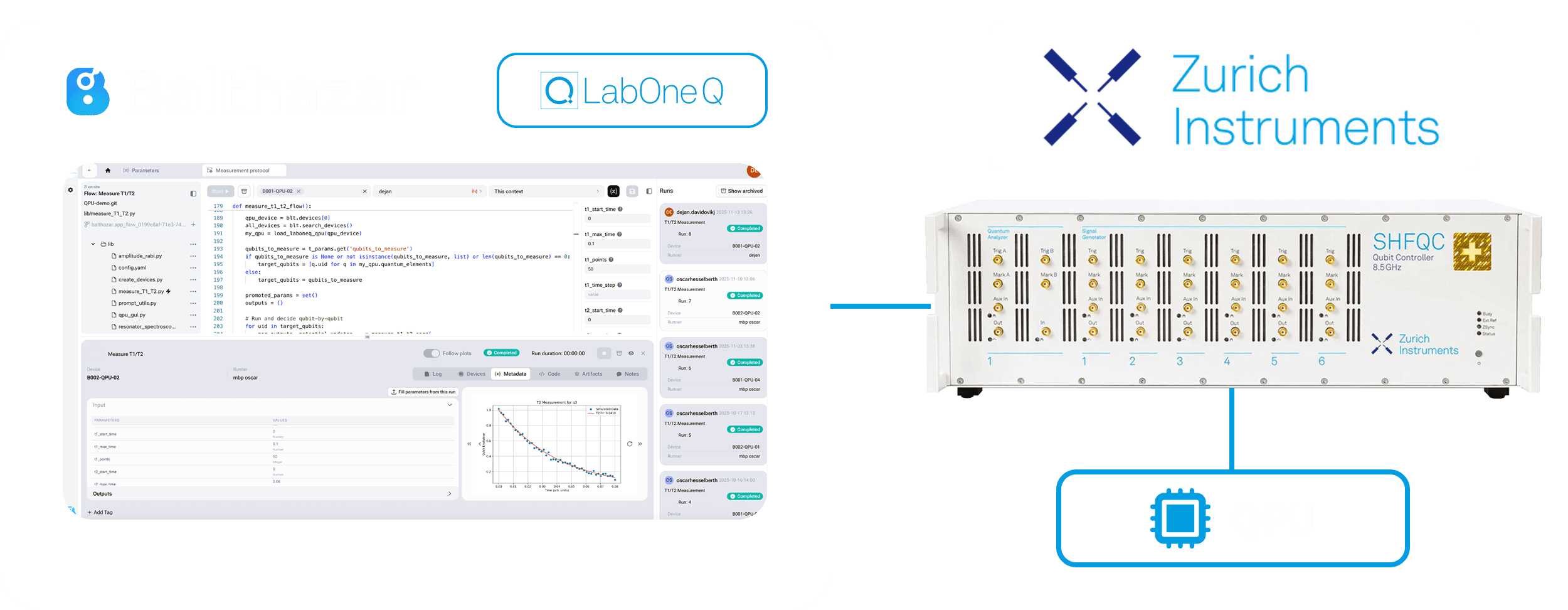
As quantum processing units scale to larger qubit counts, bring-up and calibration become complex and time-consuming. Each new QPU needs iterative measurements (resonator spectroscopy, qubit spectroscopy, Rabi, Ramsey) where results are inspected and used to update the parameters for the next step.
Meanwhile metadata such as instrument settings, pulse parameters, fit results, code versions and environmental context grows rapidly and must stay structured to compare runs, cooldowns and devices.
02 / Zurich Instruments
The approach
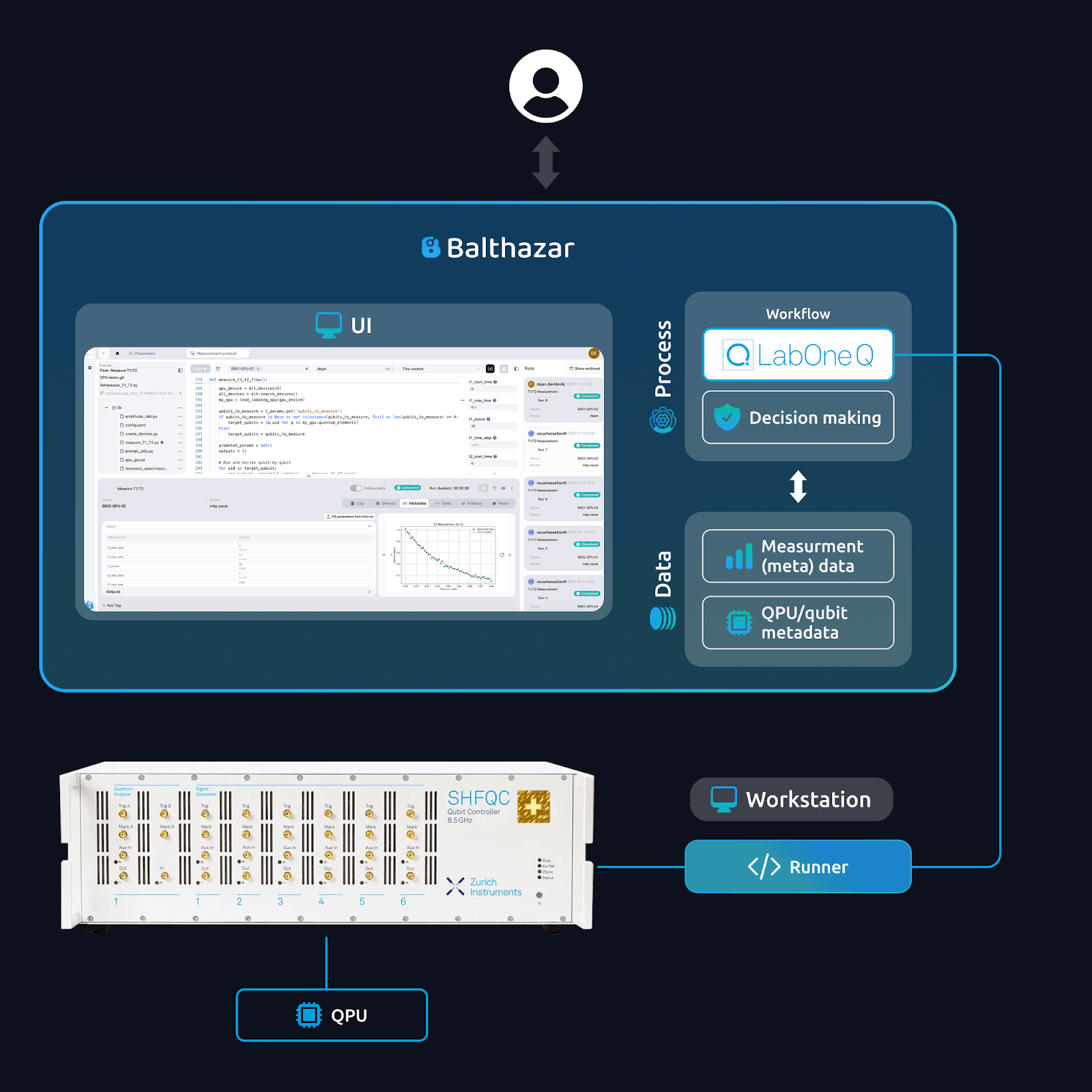
LabOne Q provides optimised, editable Python workflows for standard characterisation tasks. Balthazar executes them in a controlled environment, captures full experimental context (inputs, code version, configurations, logs and artifacts) and links results to the QPU and individual qubits in a persistent database.
Selected fit results such as f_ge, T1 and T2 are promoted into the current device state by human review or rule, while the complete measurement history is retained.
03 / Zurich Instruments
The result
Standardised, reproducible bring-up at scale, accessible to non-expert users, without giving up Python-level flexibility for expert customisation and automation.